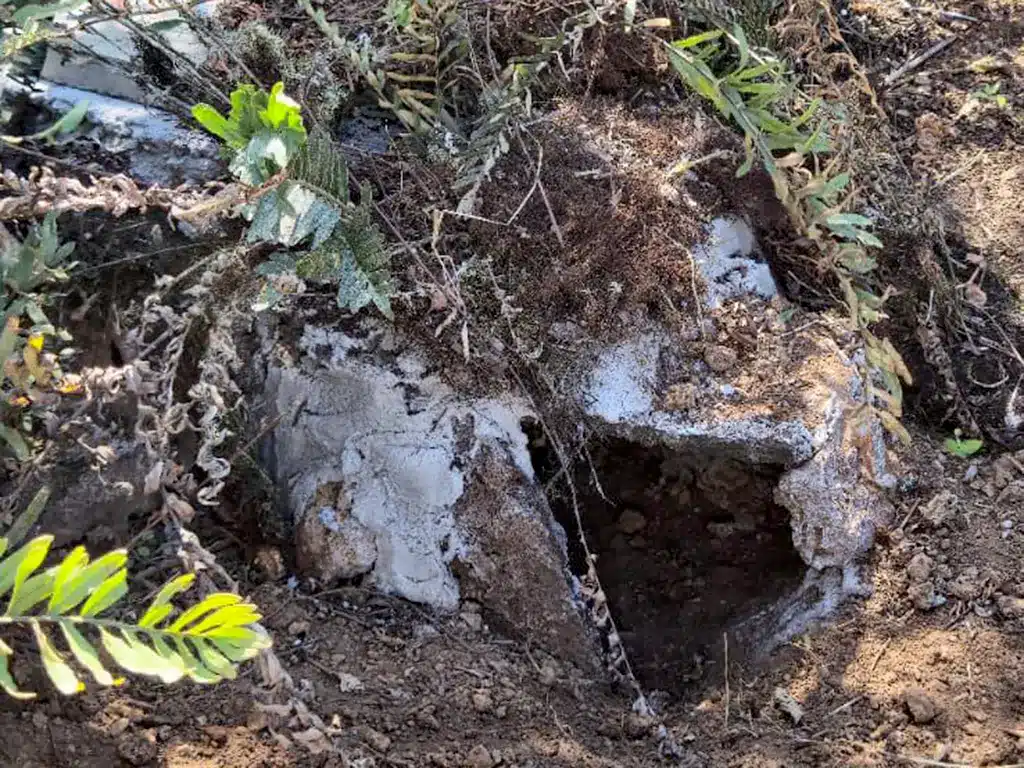
This season has brought some encouraging signs. Carolina identified traces of petrel activity near the nesting burrows at Camp, including feathers and droppings. Although our motion-triggered camera hasn’t captured definitive footage yet, the evidence on the ground suggests that petrels may have returned, but simply avoided the camera’s field of view.
No successful nestings have been confirmed so far, but as Carolina explains, this is not unusual during the first year of an acoustic attraction program. It often takes multiple seasons for birds to fully commit to new or restored nesting sites.
The data suggests that immediate intervention is required to halt the spread of Rubus niveus. Mechanical removal combined with the restoration of native canopy cover shows promise as a mitigation strategy. Furthermore, the identification of petrel flight corridors provides a blueprint for future protected area zoning.
This mapping project serves as a baseline for future monitoring efforts. Continued data collection is essential to evaluate the efficacy of conservation interventions and to adapt management strategies in the face of climate change.